Protecting Your Privacy With Temporary Mail
The threat isn't who you think it is
When people hear "online privacy," they picture a hacker in a dark room, typing furiously, breaking into their accounts. That image is dramatic and almost entirely wrong. In practice, the real threat to your privacy isn't a person targeting you — it's a system processing you. Databases getting breached. Mailing lists getting sold. Signup forms quietly feeding marketing machines that will email you, and email you, and email you, for years.
Nobody chose this. You just wanted to download a template, or read one article, or try an app for an evening. But every one of those tiny transactions asked for your email address, and each address you handed over became a permanent thread connecting your real identity to someone else's database — a database you don't control, can't audit, and can't delete yourself from.
Temporary mail exists for exactly this reality. Not for hiding from the law or doing anything shady — for breaking the chain between wanting one thing and handing over a permanent line to your inbox. This guide is about where temp mail fits in your overall privacy, what it genuinely protects you from, and — just as important — what it doesn't.
What you're actually protecting yourself from
Let's get concrete, because "privacy" is vague and vague doesn't change behavior. Here are the specific things a temporary address shields you from, each one a common consequence of handing out a real address too freely.
The breach you never hear about
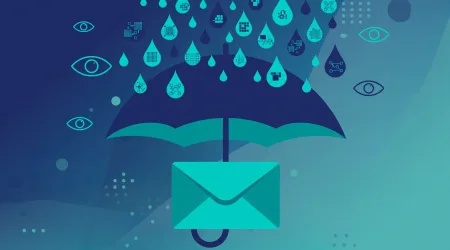
Databases get breached constantly — retail stores, forums, apps, newsletters. Most breaches are never announced to you personally; you find out months later, if at all. When your real address is in a breached database, it circulates among scammers and phishers indefinitely. When a temporary address is in there, the attackers get an inbox that no longer exists. The breach still happened, but there's nothing of you in it to exploit. Think of temp mail as breach insurance with zero premium: it doesn't prevent the breach, it just makes sure you're not in the blast radius.
The list that gets sold, not stolen
Not every exposure is a crime. Plenty of it is just business: you sign up for one thing, and the fine print you didn't read permits "sharing with partners." Your address travels from the site you trusted to companies you've never heard of, and suddenly you're getting "exclusive offers" from strangers. A temp address makes this harmless. Let them sell it — they're selling access to an inbox you've already abandoned. The economics of unwanted mail collapse when the addresses are worthless.
The profile that builds itself
Here's the subtler one. When you use the same real address across dozens of signups, data brokers can stitch those signups together into a profile: your interests, your shopping habits, your approximate location, your life events. Each individual signup seems harmless; the aggregate is a detailed picture of you, assembled without your knowledge and sold without your consent. Using a fresh temporary address per signup breaks the stitching. There's no common thread to pull, because each thread leads to a dead end.
The newsletter you can't escape
Everyone has done this: signed up for something mildly interesting, then spent months hunting for the unsubscribe link buried in six-point font at the bottom of emails you never wanted. Some senders make unsubscribing genuinely difficult; others simply ignore the request. With a temp address, unsubscribing is one click of the Change button. No link-hunting, no "please allow 10 business days," no dark patterns. The address is gone, and with it, every future email they were planning to send you.
Where temp mail fits in your overall privacy
Temporary email is one layer, not the whole building. It helps to see where it sits alongside the other things privacy-conscious people do, so you use it for what it's good at instead of expecting it to do everything.
Think of your online identity in tiers. Tier one is your real identity: banking, government services, your primary email, accounts you'd be devastated to lose. This tier gets your real address, strong unique passwords, and two-factor authentication. Temp mail never touches this tier — ever.
Tier two is your persistent-but-low-stakes identity: social media, shopping accounts you actually use, subscriptions you chose deliberately. These get your real address too, because you need recovery access and ongoing communication. What they don't get is a free pass to share it — and this is where being selective about signups matters.
Tier three is everything else: the one-off downloads, the trials, the forums you'll visit twice, the Wi-Fi gates, the contest entries, the "just looking" accounts. This is temp mail territory, and it's bigger than most people realize. In practice, the large majority of email-gated interactions fall in this tier. That's a lot of exposure redirected away from the address that actually matters.
The power of this setup isn't any single layer — it's the separation between them. A breach in tier three can't touch tier one, because they share nothing: not an address, not a password, not a thread of identity. Temp mail is the tool that makes tier three possible. Without it, everything collapses into one inbox, and one inbox means one breach away from everything.
What temp mail does not protect you from
Honesty matters here, because temp mail gets oversold and then people feel betrayed when it doesn't do things it never claimed to do. Here are the boundaries.
It doesn't hide who you are from the site itself. When you visit a website, it can still see your IP address, your browser fingerprint, cookies, and everything else in the standard tracking toolkit. A temp address hides your email identity, not your network identity. If you need that level of protection, you're talking about VPNs and hardened browsers — a different conversation entirely.
It doesn't make you anonymous to law enforcement or to the service. Temporary doesn't mean untraceable in any absolute sense. Don't use temp mail for anything where anonymity has legal consequences. It's an unwanted-mail-avoidance tool, not a cloak.
It doesn't protect you from phishing. This bears repeating: a fake "verify your account" email is equally dangerous in a temp inbox and a real one. The inbox protects your address from exposure; it does nothing for your judgment. Read before you click, everywhere, always.
It doesn't encrypt anything. Mail sent to a temp address travels like normal email. It's fine for verification codes and newsletters — it's not the tool for genuinely sensitive communication. For that, you want end-to-end encrypted messaging, not email at all.
None of this diminishes what temp mail is good at. It just keeps expectations honest. A hammer is a superb tool as long as you don't expect it to be a screwdriver.
The one rule that makes it all work
If this whole guide had to collapse into a single rule, it would be this: never let a temporary address become permanent. Every protection described here — breach immunity, list-sale harmlessness, profile-breaking, easy unsubscribing — depends on rotation. An address you keep for months is just a second real inbox, and it accumulates exactly the exposure you were avoiding.
In practice, this means building the reflex: job done, hit Change, move on. Open mailss.online, copy the address, use it, read the mail, rotate. The full cycle takes under a minute once it's habit. It's a reflex worth building — the same way you lock your car without thinking — not because trouble is expected every time, but because the cost of the habit is near zero and the cost of skipping it compounds silently.
And keep tier one sacred. The moment you catch yourself thinking "maybe the temp address is fine for this bank alert" or "it's okay to use it for password recovery just this once" — stop. That's the line. Temp mail protects your privacy by being disposable, and disposability is the opposite of what important accounts need. The rule isn't complicated: if losing the address would cause you a real problem, it gets your real address. Everything else gets Mailss.
Frequently asked questions
Is using a temporary email address legal?
Yes. Choosing which inbox receives a site's emails is perfectly legal and a mainstream privacy practice — you're not deceiving anyone, you're managing your own contact information. The only caveat: if a service explicitly prohibits disposable addresses in its terms, respect that policy rather than working around it.
Does temp mail stop unwanted mail completely?
It stops unwanted mail from reaching your real inbox, which is the goal. The temp inbox itself may collect junk — that's fine, it's doing its job as a shield. When it fills up with mail you didn't ask for, that's your cue to rotate to a fresh address.
Can a temp address receive mail from Gmail or other big providers?
Yes. A temporary address is a working email address — mail sent from Gmail, Outlook, or any other provider arrives normally. The "temporary" part is about lifespan and identity, not about compatibility with the email system.
What happens to data when Change is clicked?
The old address and its entire inbox are discarded. There's no account, no profile, no history tying your sessions together. That's the design: disposability isn't a limitation here, it's the feature doing the protecting.
Should temp mail be used for social media accounts?
Only for accounts you don't care about keeping. If it's a profile you might want in a year — with photos, contacts, history — use your real address so you can always recover it. Temp mail is for the accounts you'd happily forget tomorrow.
Privacy isn't a product you buy or a setting you toggle. It's a set of habits, and temp mail is one of the highest-leverage habits available: thirty seconds per signup, in exchange for keeping your real identity out of databases you'll never see, breaches you'll never hear about, and marketing lists you never agreed to join. Start with the next signup. You'll feel the difference within a week — mostly in the mail you stop receiving.